
SNADI NKM Hybrid Solar
Inverter
Exterior style
Style 1 selected


Main Feature
- Pure sine wave both 110V~240V
- Built-in MPPT 40A PV Input 150VDC Built-in MPPT 60A/100A PV Input 200VDC
- Compatible work with LiFePO4 battery via RS485
- Low frequency(Built in square transformer)
- Communication interface:RS232/RS485/Dry contact
- EQ function to optimize battery performance and extend lifecycle
Product Details
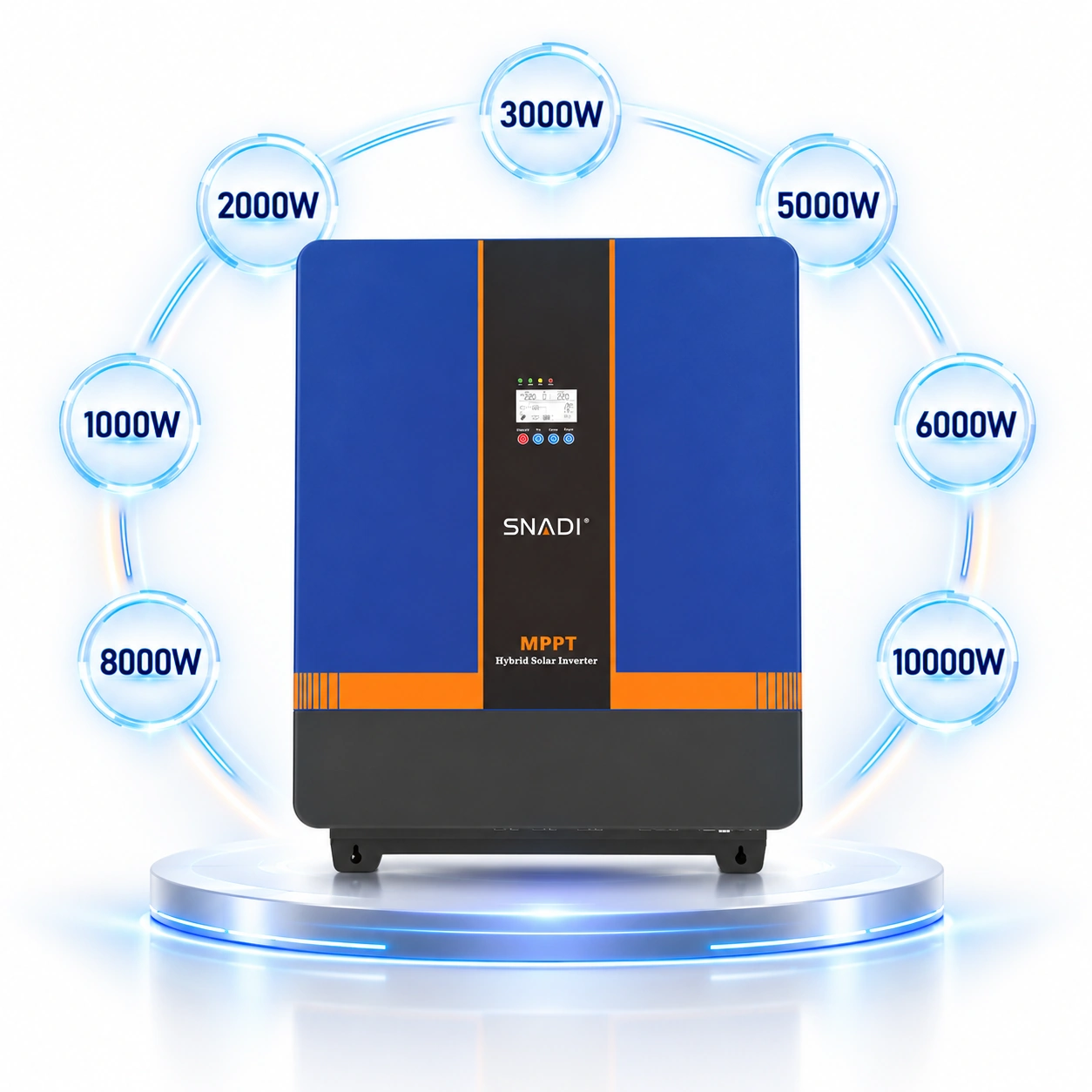
Seven power ratings
Seven NKM ratings span 1–10 kW, giving buyers model-specific power choices within one low-frequency inverter range.

Pure sine wave output
NKM provides pure sine wave output, with the AC voltage configuration matched to the model and destination.
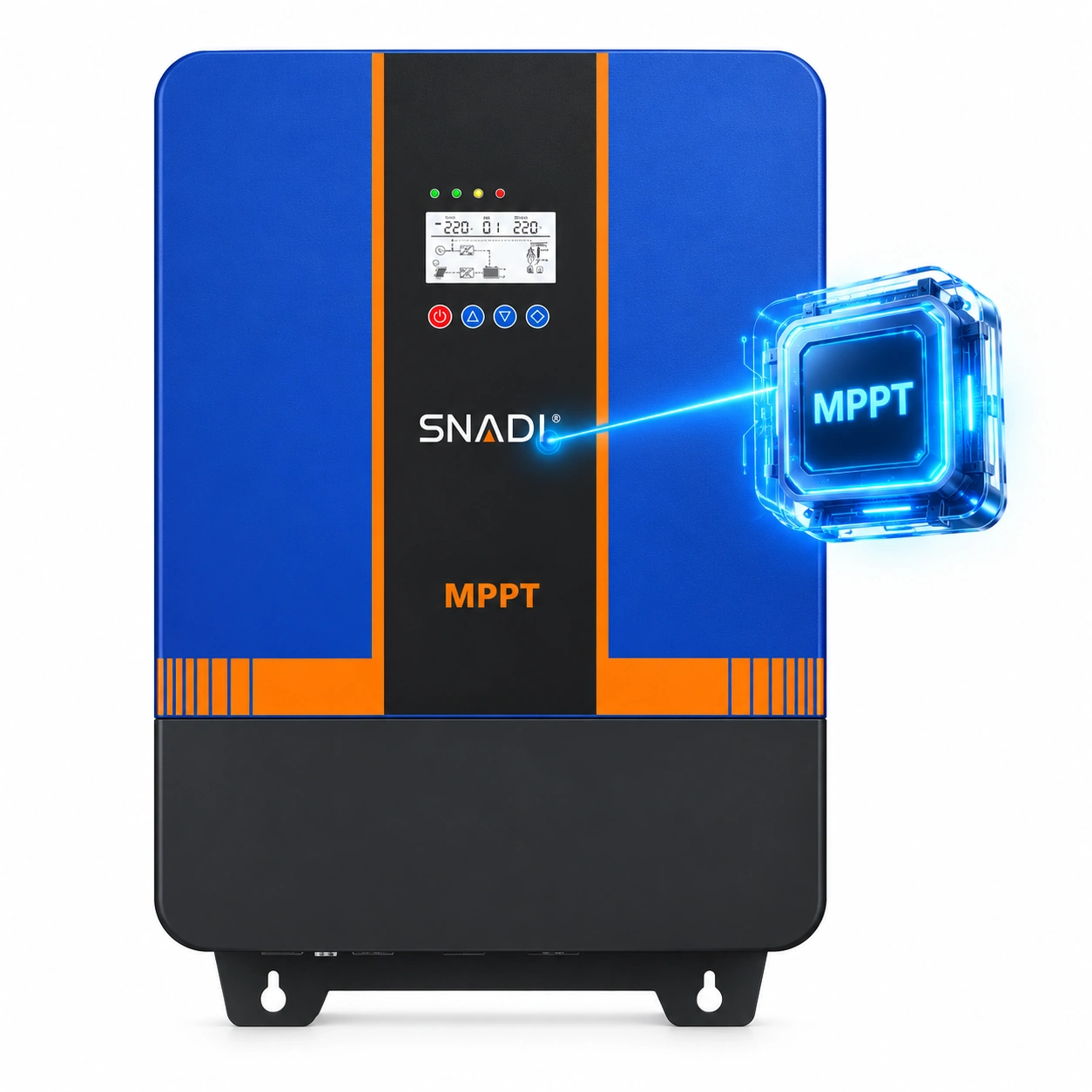
Built-in MPPT solar controller
Built-in MPPT charging offers model-specific current and PV voltage limits across the NKM range.
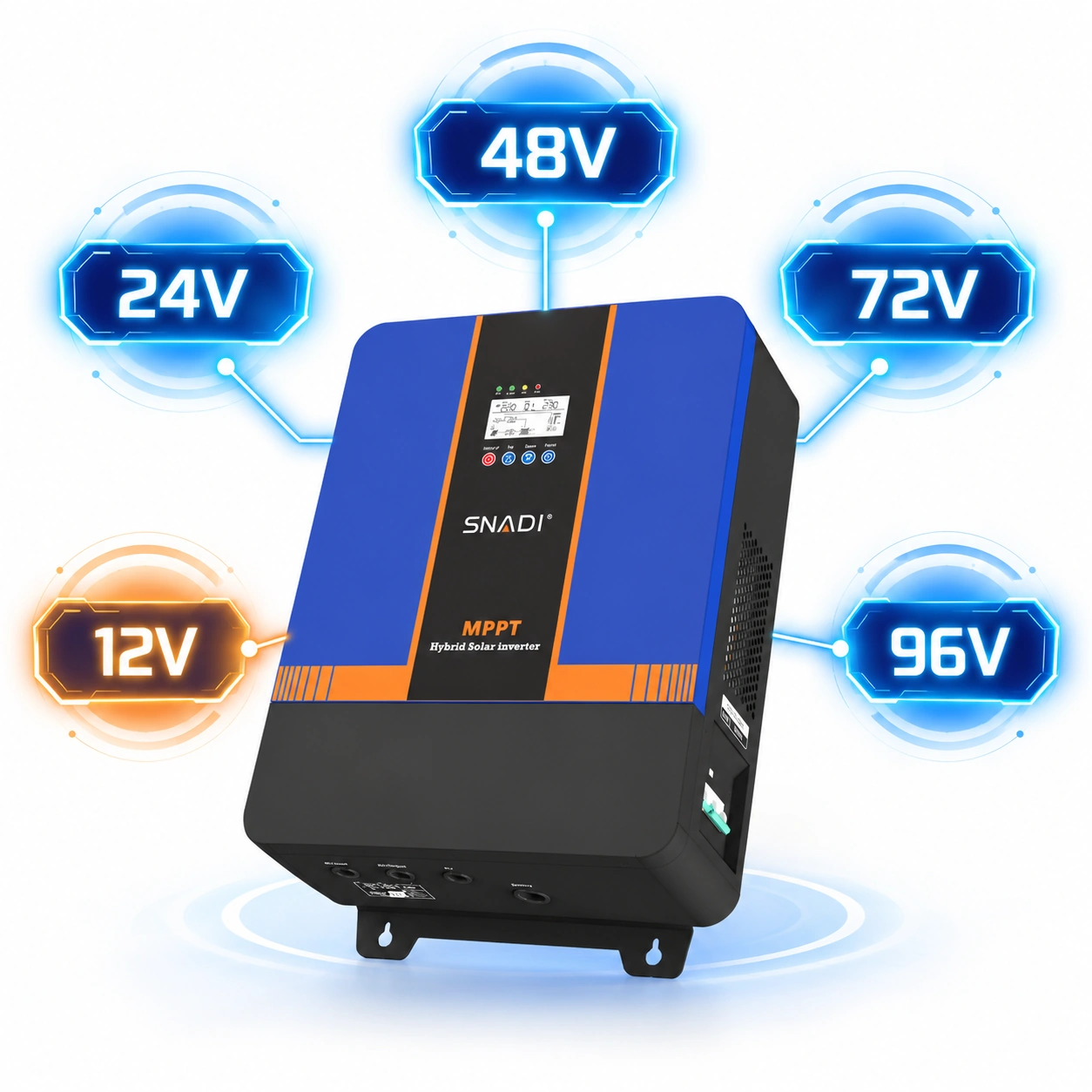
Flexible Battery Options
NKM hybrid solar inverters offer 12 V, 24 V, 48 V, 72 V or 96 V battery configurations, depending on model.
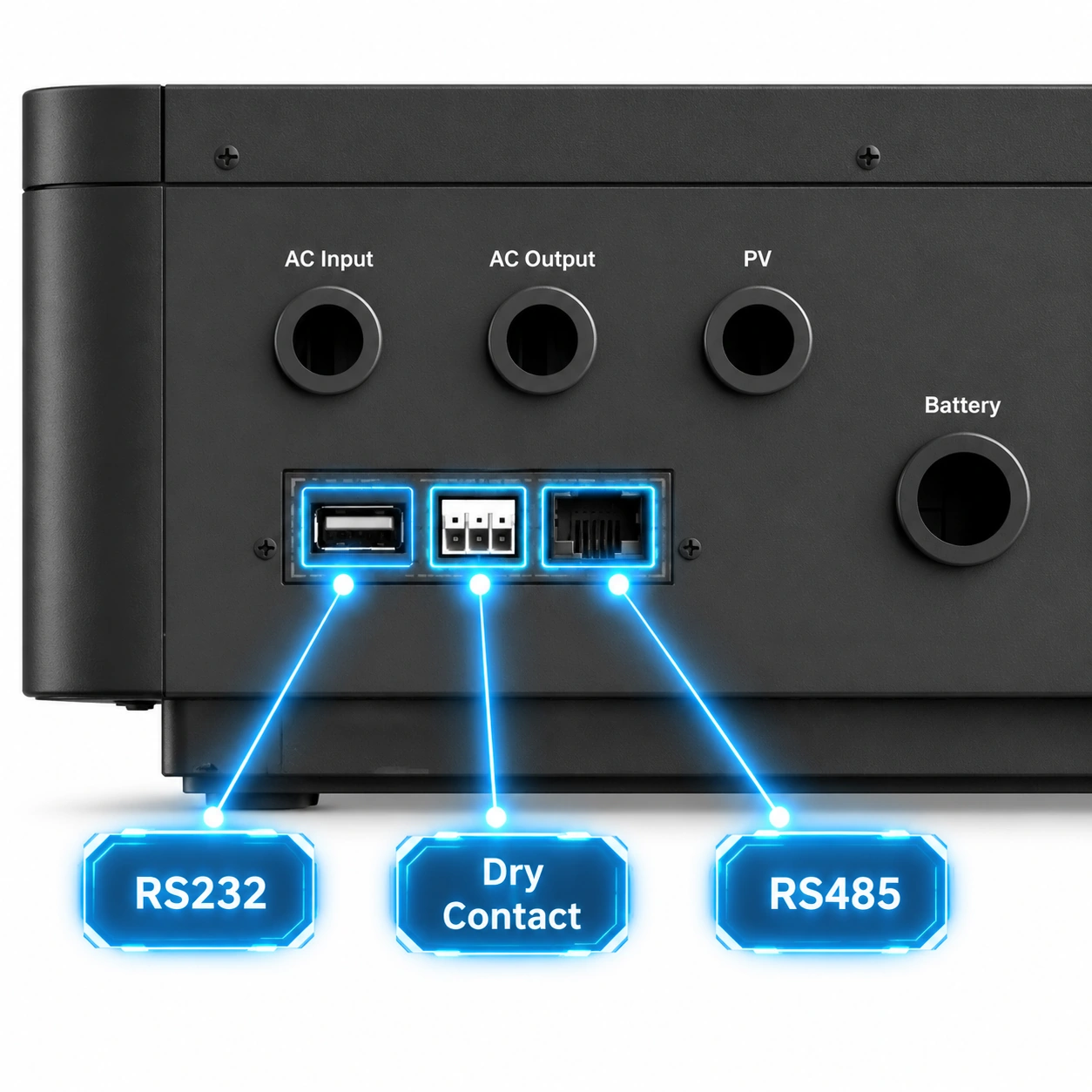
Communication interfaces
RS232, RS485 and dry-contact interfaces are available; LiFePO4 use requires a compatible RS485 protocol.
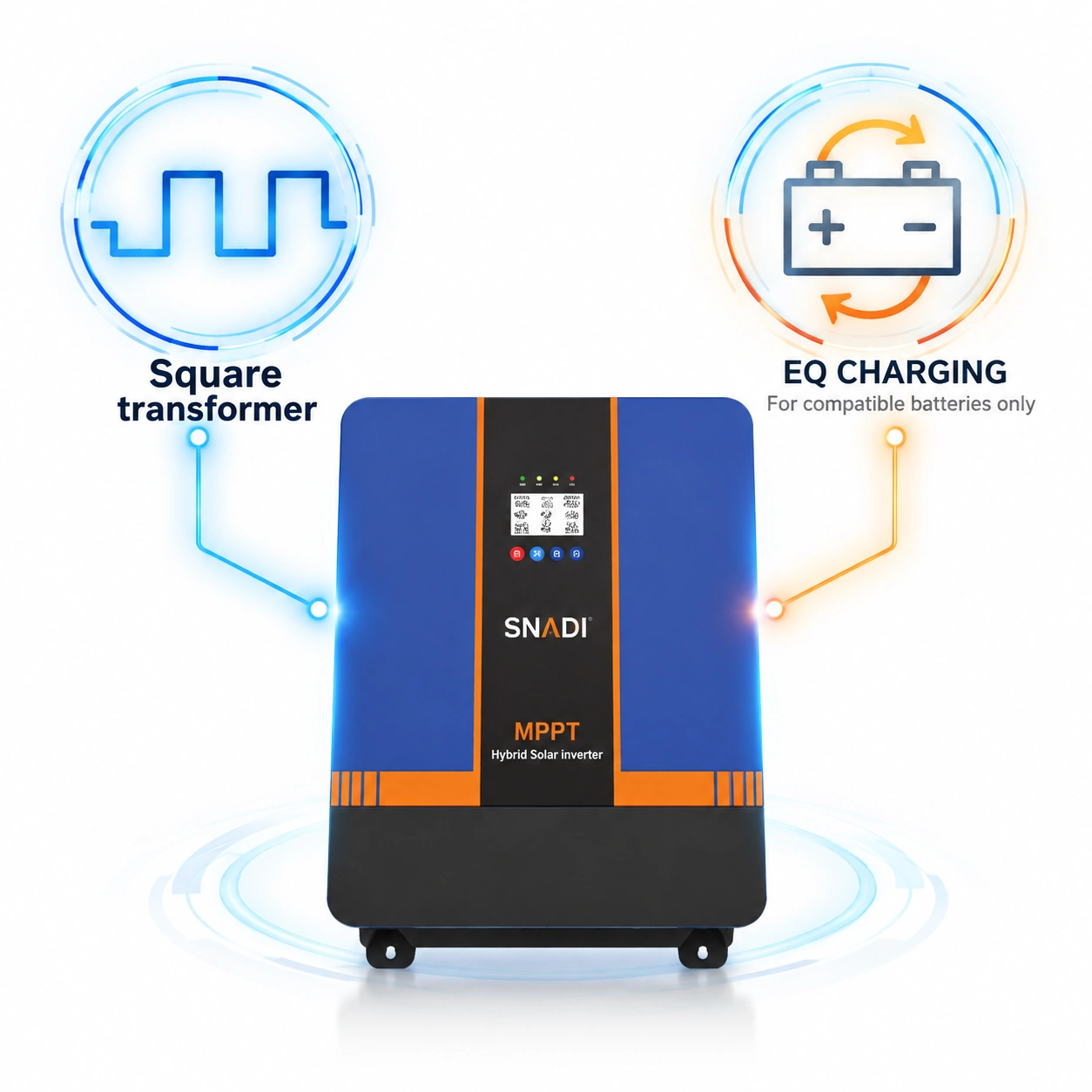
Square transformer and EQ function
A built-in square transformer defines the low-frequency design; use EQ settings only for a suitable battery.
Technical specification
Download| MODEL | NKM-1000 | NKM-2000 | NKM-3000 | NKM-5000 | NKM-6000 | NKM-8000 | NKM-10000 |
|---|---|---|---|---|---|---|---|
| Power Rating | 1000W | 2000W | 3000W | 5000W | 6000W | 8000W | 10000W |
| Battery | |||||||
| Rated Voltage | 12/24VDC | 24VDC | 24/48VDC | 48VDC | 48/72/96VDC | ||
| AC Charge Current | 12V:0~25A 24V:0~15A | 0~30A | 24V:0~35A 48V:0~25A | 0~30A | 0~35A | 0~40A | |
| Battery Type | Can be set | ||||||
| Input | |||||||
| Voltage Range | 73~138/145~275VAC | 85~138/170~275VAC | |||||
| Frequency | 45~65Hz | ||||||
| Output | |||||||
| Voltage Range | 110V(can be set):100/110/120VAC; 220V(can be set):200/210/220/230/240VAC | 220V(can be set):200/210/220/230/240VAC | |||||
| Frequency | 50/60Hz±1%(Inverter mode) | ||||||
| Output Wave | Pure Sine Wave | ||||||
| Conversion Time | <10ms(Typical load) | ||||||
| Efficiency | >85%(80% Resistive load) | ||||||
| Overload | 110~120%/60s;120~130%/10s 130~150%/2s;>150%/500ms | ||||||
| Protection | Battery overvoltage/low voltage,overload,short circuit protection,overtemperature protection,etc. | ||||||
| Solar Controller | |||||||
| MPPT Voltage Range | 12VDC:18~200VDC;24VDC:34~200VDC;48VDC:65~200VDC | ||||||
| Max.PV Input Power | 12VDC/40A:570W 24VDC/40A:1130W | 12VDC/60A:900W;24VDC/60A:1700W 48VDC/60A:3400W;48VDC/100A:5400W | 48VDC/100A:5400W | ||||
| Rated Charge Current | 40A(Max) | 60A(Max) | 100A(Max) | ||||
| MPPT Efficiency | ≥99% | ||||||
| Average Charging Voltage (lead acid battery) | 12V:14.2VDC;24V:28.4VDC;48V:56.8VDC | 48V:56.8VDC | |||||
| Floating Charge Voltage | 12V:13.75VDC;24V:27.5VDC;48V:55VDC | 48V:55VDC | |||||
| Operating Ambient Temperature | 0~40°C | ||||||
| Storage Ambient Temperature | -15~50°C | ||||||
| Operating/Storage Environment | 0~90°C No Condensation | ||||||
| Dimensions:L*W*H(mm) | 321*125*420 | 461*170*545 | 452*252*582 | ||||
| Packing Size: L*W*H(mm) | 380*205*515 | 555*260*645 | 525*315*650 | ||||
Why We Recommend the NKM Inverter

We recommend the NKM for distributors and installers who want to build their inverter offering around a low-frequency range with real choice in power and configuration. With seven ratings from 1 kW to 10 kW, the series combines a built-in square transformer, pure sine wave output and MPPT solar charging. Model-dependent 40 A, 60 A and 100 A charging options let you select the inverter around the battery system and PV array you intend to supply. RS485 communication with compatible LiFePO4 batteries adds another useful option when putting together a complete system for your customers.
At SNADI, we see the NKM as a strong addition to a distributor’s product range and a practical choice for installers sourcing directly from our factory. You can choose the power rating and electrical configuration for your market while keeping your offering within one product family. Our team will work with you on the model selection, battery communication requirements and order quantities, then prepare a factory quotation for that configuration. Bring us your next stocking plan or installation requirement—we would welcome the opportunity to supply the NKM units for your business.
Explore More Solar Hybrid Inverters
View All Solar Hybrid Inverters


FAQS

Which NKM rating should I select for my product range?
The 2026 catalog lists NKM-1000, NKM-2000, NKM-3000, NKM-5000, NKM-6000, NKM-8000 and NKM-10000, from 1000W to 10000W. Share the intended load, market and order quantity with SNADI so the factory team can help confirm the appropriate rating.
How should I match the NKM battery voltage and MPPT input?
Battery-rated voltage and MPPT limits vary by model. The catalog lists 12/24VDC, 24VDC, 24/48VDC, 48VDC and 48/72/96VDC groups, with MPPT ranges of 12VDC:18~200VDC, 24VDC:34~200VDC and 48VDC:65~200VDC. Send the intended battery and PV array details so SNADI can confirm the exact model configuration before ordering.
What solar charging options are available across the NKM series?
MPPT charging current is model-dependent, with 40 A, 60 A and 100 A options in the NKM specification table. Battery voltage, PV power and input-voltage limits must be matched to the same model column. Send the panel open-circuit voltage, operating voltage, array power and battery configuration so SNADI can check the selected inverter before connection.
Which communication interfaces and battery compatibility should I confirm?
The NKM catalog lists RS232, RS485 and dry contact interfaces, and documents communication with compatible LiFePO4 batteries via RS485. Compatibility depends on the battery model and communication protocol; provide those details to SNADI rather than assuming every LiFePO4 battery is plug-and-play.
What should I send SNADI for a factory quotation?
Send the NKM rating, required battery voltage, local AC voltage and frequency, PV array information, communication requirements, destination market and order quantity. Our factory team can use those requirements to prepare a quotation for the requested configuration and supply scope.