
SNADI ES Hybrid Solar Inverter
Exterior style
6.2 kW selected


Main Feature
- Built-in 1 or 2 MPPT, model-dependent
- Up to six units in parallel on B models
- Off-grid and grid-connected operation
- Battery-free operation
- Detachable dust cover
- Optional Wi-Fi remote monitoring
Product Details
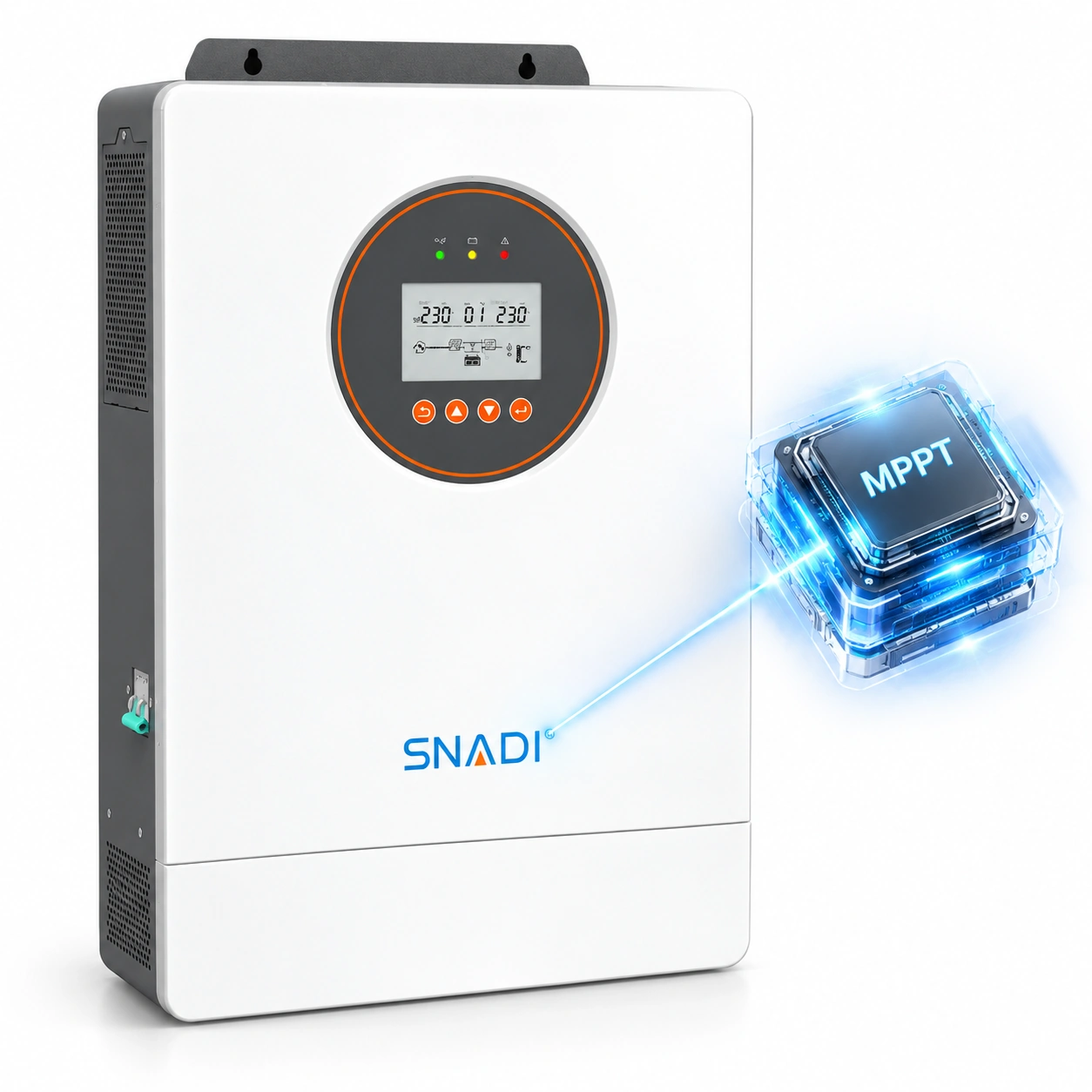
Built-in MPPT solar charging
ES integrates one or two MPPT trackers, depending on model, for built-in solar charging.
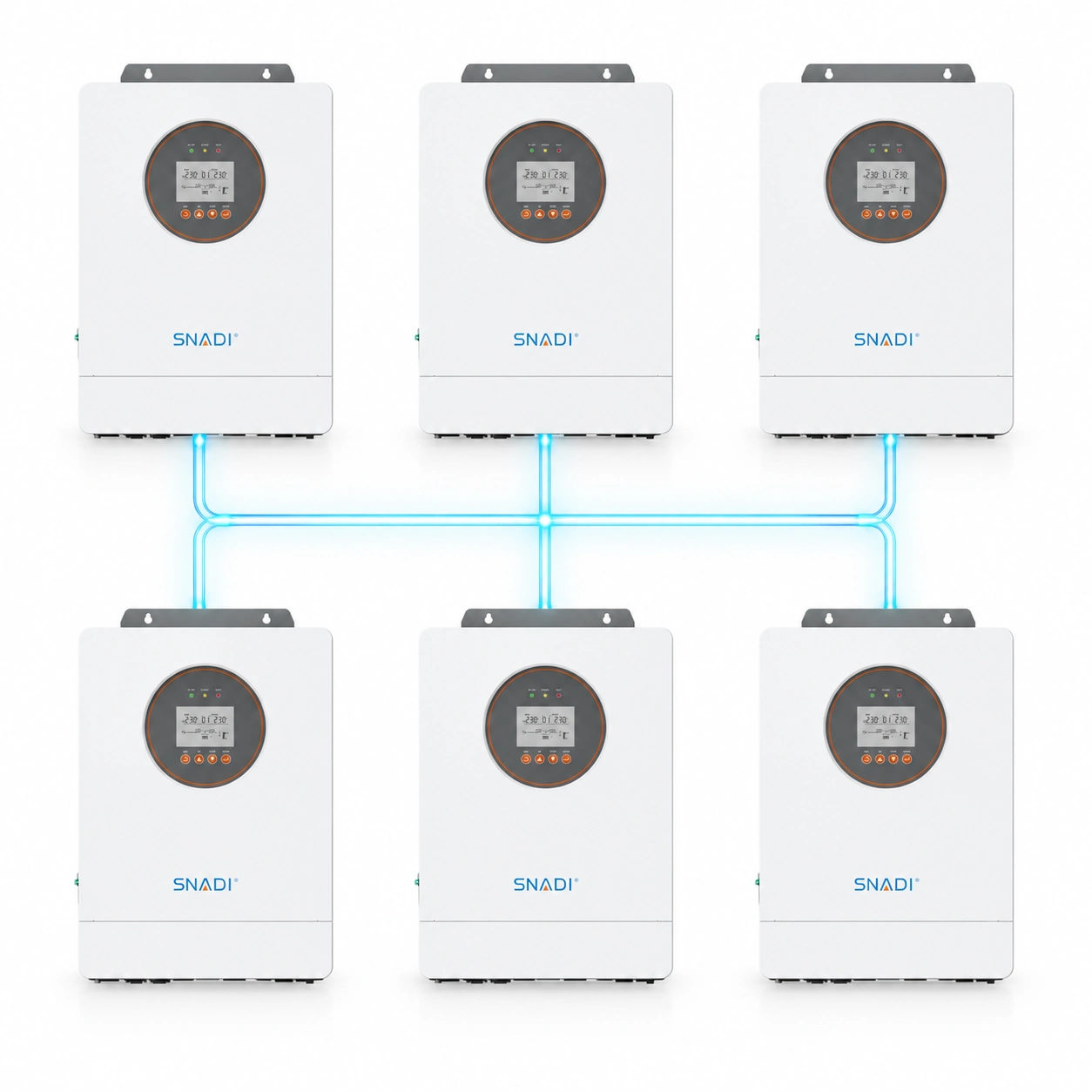
Parallel expansion on B models
ES B models support up to six units in parallel; A models are intended for stand-alone installations.
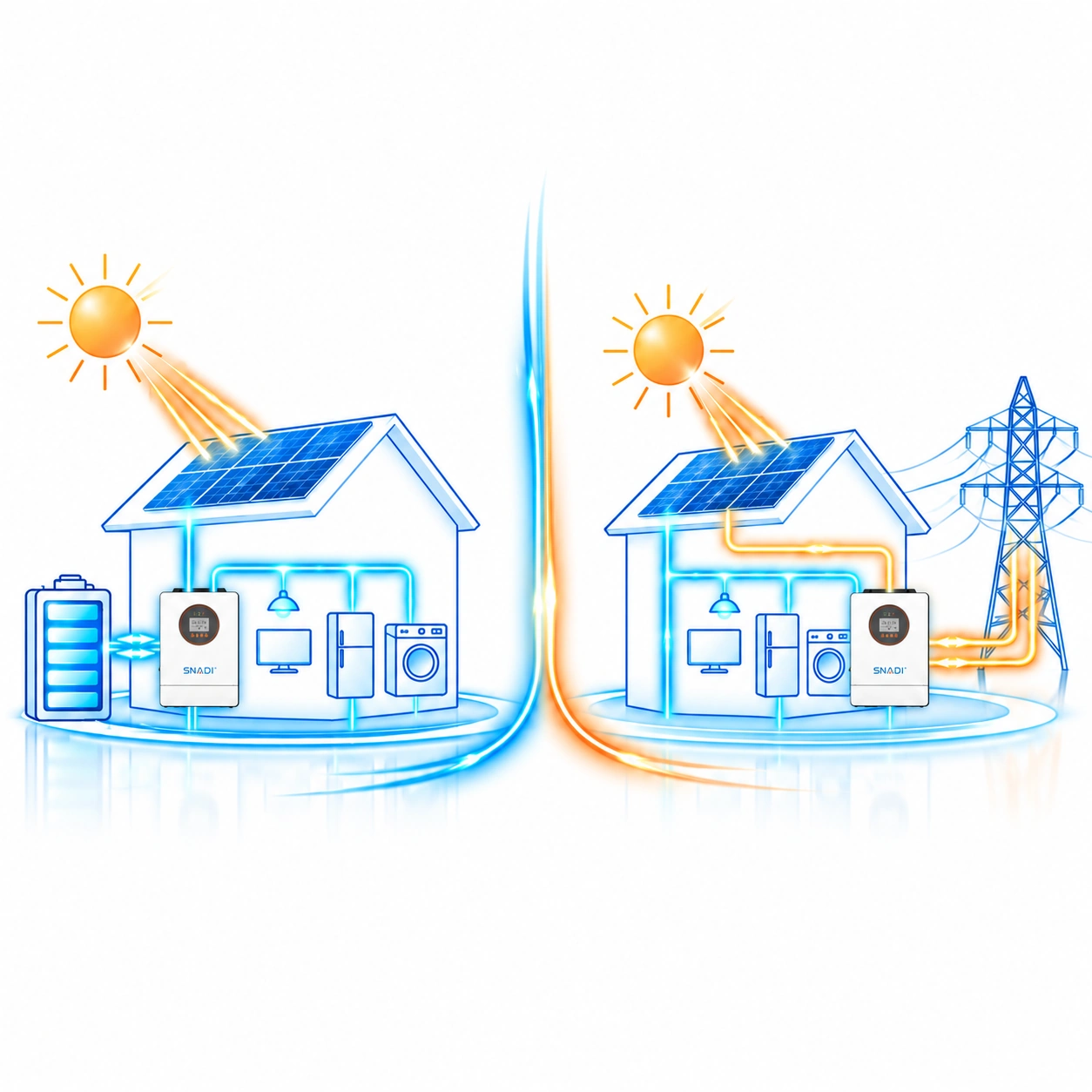
On-grid and off-grid flexibility
ES supports off-grid and grid-connected operation with 230 VAC pure sine wave output.
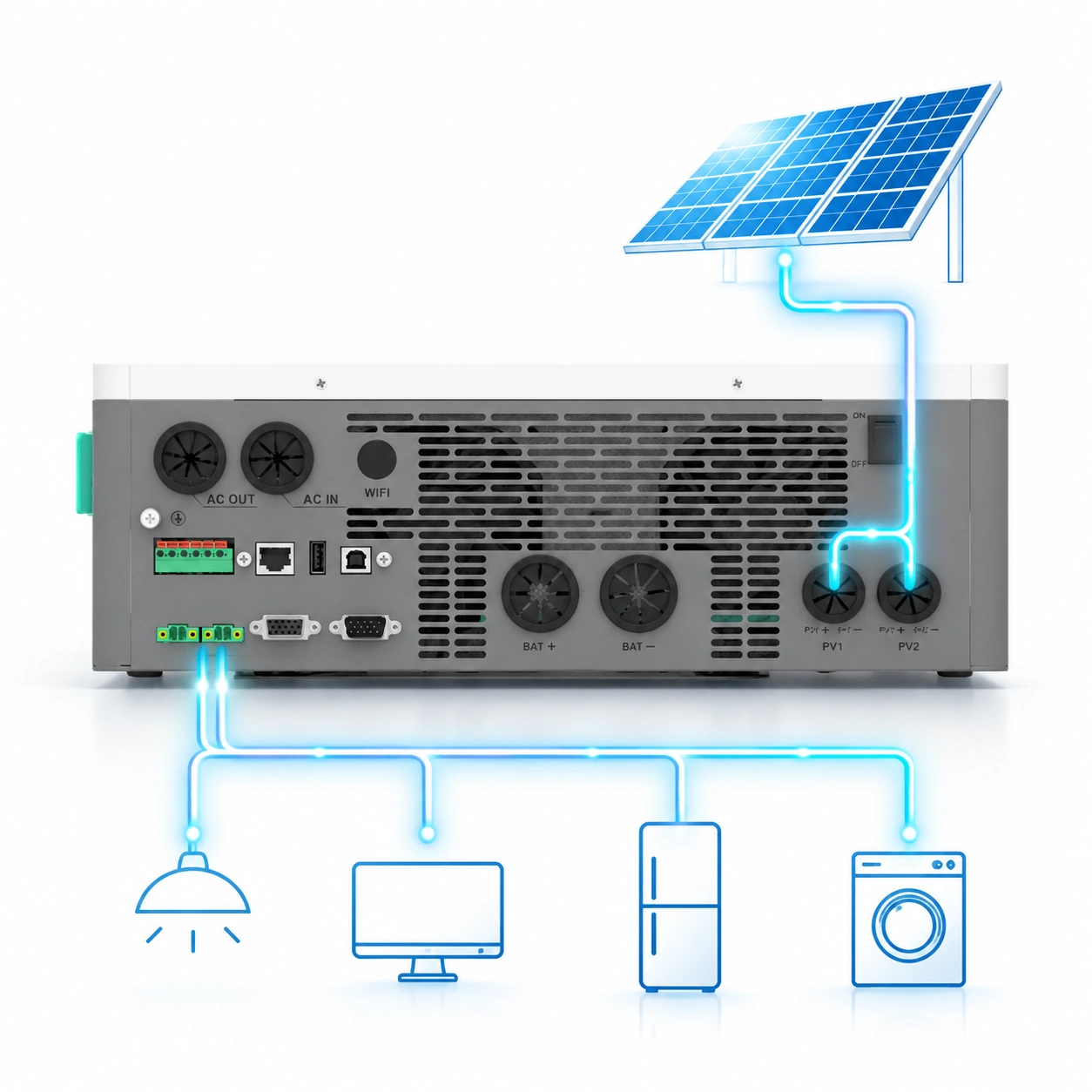
Solar power without a battery
Available solar and utility power can supply loads without a battery; storage uses a matched 48 V battery system.
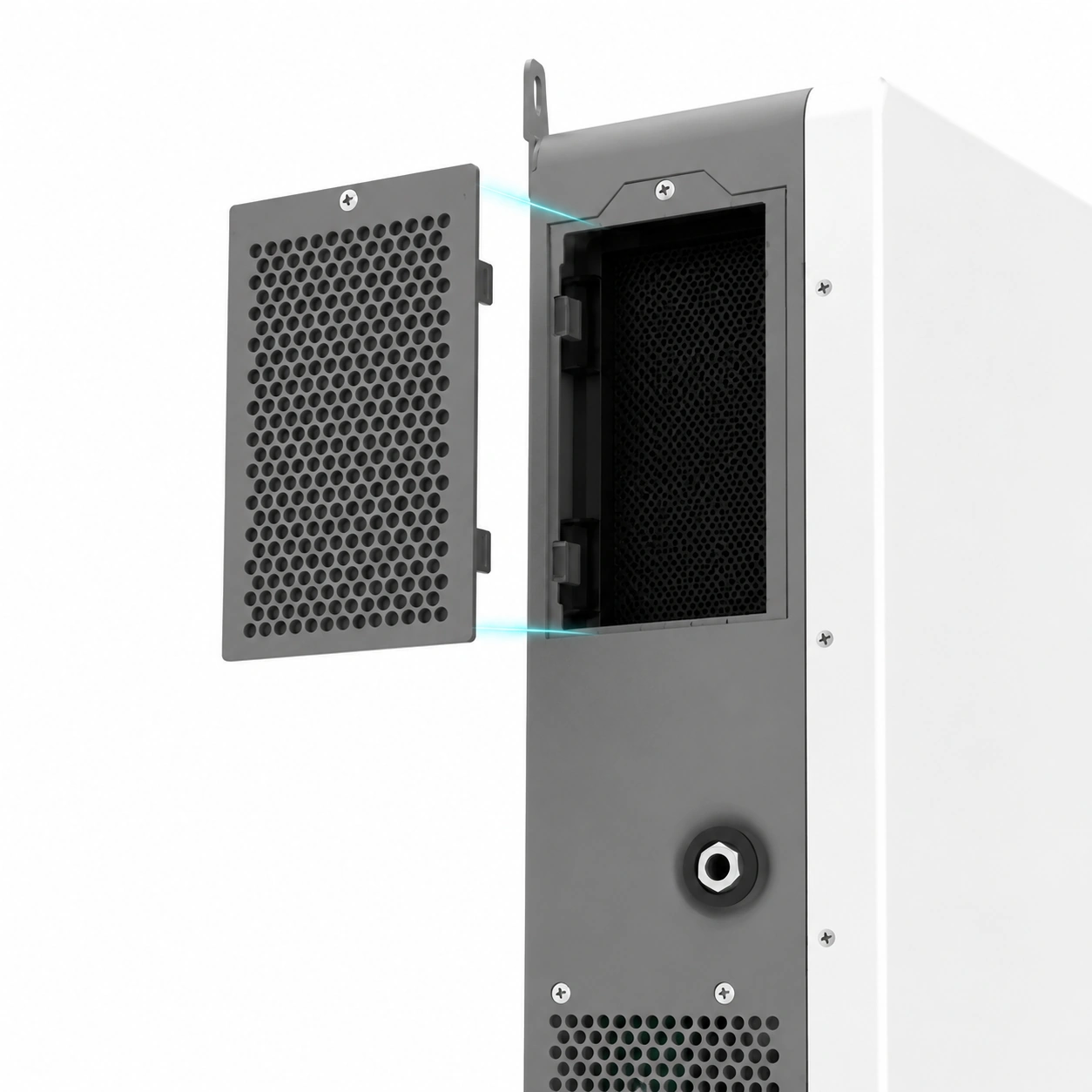
Detachable dust cover
A detachable dust cover, forced-air cooling and adjustable fan speed support ES dust and heat management.
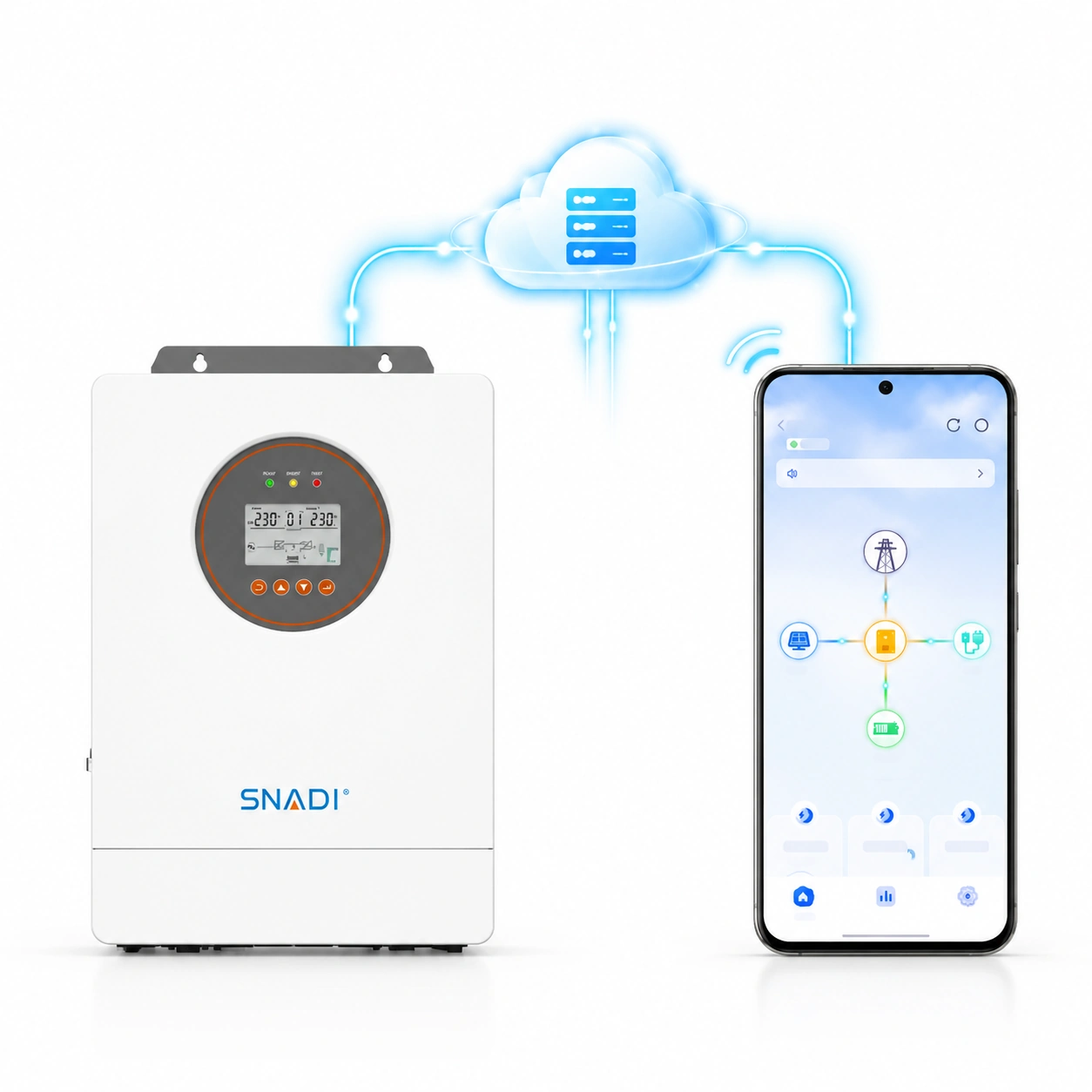
Optional Wi-Fi monitoring
Optional Wi-Fi supports remote monitoring; USB and RS485 provide additional communication interfaces.
Technical specification
Download| MODEL | ES622048-M100-A | ES622048-M100-B | ES123048-M150-A | ES123048-M150-B |
|---|---|---|---|---|
| Parallel Mode (function reserved) | ||||
| Allow Quantity | -A None/-B 1~6 | |||
| Mains Mode | ||||
| Nominal Input Voltage | 220/230VAC | 230VAC | ||
| Input Voltage Range | (170~280VAC)±2%(UPS mode);(90~280VAC)±2%(APL mode) | |||
| Frequency | 50/60Hz(Auto detect) | |||
| Frequency Range | 47±0.3~55±0.3Hz(50Hz);57±0.3~65±0.3Hz(60Hz) | |||
| Max. Efficiency | >95% | |||
| Conversion Time (bypass and inverter) | 10ms(typical) | |||
| Max. Bypass Overload Current | 40A | 60A | ||
| Inverter Mode | ||||
| Output Voltage Waveform | Pure Sine Wave | |||
| Nominal Output Power | 6200VA/6200W | 12000VA/12000W | ||
| Power Factor | 1 | |||
| Nominal Output Voltage | 230VAC | |||
| Output Frequency Range | 50±0.3Hz/60±0.3Hz | |||
| Max. Efficiency | >92% | ≥93% | ||
| Overload Protection | (102%<load<125%) ±10%:report error and turn off the output after 5 minutes (125%<load<150%) ±10%:report error and turn off the output after 10 seconds Load>150%±10%:report error and turn off the output after 5 seconds | |||
| Peak Power | 12000VA | 24000VA | ||
| Load Motor Capability | 4HP | 8HP | ||
| Nominal Batteryinput Voltage | 48V(Min. start voltage 44V) | |||
| Battery Voltage Range | 40.0~60VDC±0.6VDC(Undervoltage alarm/shutdown voltage/overvoltage alarm/overvoltage recovery...LCD screen can be set) | |||
| Save Power Mode | Load≤25W Enter save power mode | Load≤50W Enter save power mode | ||
| Mains Charge | ||||
| Battery Type | Lead-acid or lithium batteries | |||
| Max. Charge Current (configurable) | 80A | 150A | ||
| Charge Voltage Range | 40~60VDC | |||
| Solar Charge | ||||
| Max. PV Open Circuit Voltage | 500VDC | |||
| PV Operate Voltage Range | 120~500VDC | |||
| MPPT Voltage Range | 90~450VDC | |||
| Battery Voltage Range | 40~60VDC | |||
| Max.PV Input Power/Current | 6500W/27A | 9000W*2/27A*2 | ||
| Charge Current Range (configurable) | 0~100A | 0~150A | ||
| Max. Hybrid Charge Current (PV+AC) | ||||
| Max. Hybrid Charge Current (configurable) | 0~100A | 0~150A | ||
| Certification | ||||
| Safety Certification | CE(IEC62109-1,2) | |||
| EMC Certification Level | EN61000,C2 | |||
| Operate Temperature Range | -15~55°C | |||
| Storage Temperature Range | -25~60°C | |||
| Humidity Range | 5~95%(Three anti-paint protection) | |||
| Noise | ≤60dB | |||
| Cooling | Forced air cooling,adjustable wind speed | |||
| Communicate | USB/RS485 (WiFi/GPRS)/Dry node control | |||
| Dimensions(L*W*H)mm | 280*100*415 | 350*120*540 | ||
| Package Dimensions(L*W*H)mm | 385*200*505 | 460*230*645 | ||
| Weight(KG) | 7.8 | 18.5 | ||
Why We Recommend the ES Inverter

We recommend the ES for a product range that gives customers more than one way to adopt solar power. Battery-free operation is a compelling starting point: solar and utility power can serve the loads without a storage battery. For customers who want storage, the same ES family supports a 48 V lead-acid or lithium battery system. That flexibility gives distributors two clear sales propositions within one recognisable inverter range.
The B models add another reason to choose ES: parallel expansion of up to six units, alongside the 6.2 kW and 12 kW ratings. Built-in MPPT charging, pure sine wave output and optional Wi-Fi complete an offer that is easy to explain without relying on a long list of extras. As the manufacturer, we see ES as a strong addition for distributors and installers building a versatile hybrid inverter portfolio.
Explore More Solar Hybrid Inverters
View All Solar Hybrid Inverters


FAQS

Which power ratings are available in the SNADI ES series?
The ES series offers 6.2 kW and 12 kW models, each with pure sine wave output at 230 VAC and a power factor of 1. Both power ratings are available as A and B versions.
Can the ES operate without a battery?
Yes. In battery-free operation, solar and utility power can supply the connected loads without a storage battery. This mode still requires available input power; the inverter does not store energy on its own.
What is the difference between ES A and B models?
A models are stand-alone versions. B models support parallel operation with up to six units. The distinction applies to both ES622048-M100 and ES123048-M150 models, so parallel capability belongs to the B version rather than the entire series.
How does the ES handle solar charging?
The ES has built-in MPPT solar charging with one or two trackers depending on the model. The 6.2 kW version has a 6500 W maximum PV input rating; the 12 kW version has two 9000 W PV inputs. These are solar-input ratings, separate from the inverter's AC output ratings.
Is Wi-Fi monitoring included as standard?
Wi-Fi remote monitoring is optional. The front-panel LCD provides local operating information, while USB and RS485 interfaces provide additional communication options.